

PREAMBLE
In pursuit of the mandate of the African Commission on Human and Peoples’ Rights (ACHPR) under Article 45 (1) (a) of the African Charter on Human and Peoples’ Rights (African Charter) for organizing seminars and conferences as part of the promotion of the rights and freedoms in the Charter
Acting on the ACHPR Resolution 550 (LXXIV) 2023 mandated its Working Group on Extractive Industries, Environment and Human Rights, among others, to initiate ‘a continental platform of support for peer-learning and knowledge exchange, through the annual African Forum on Business, Trade and Human Rights,’
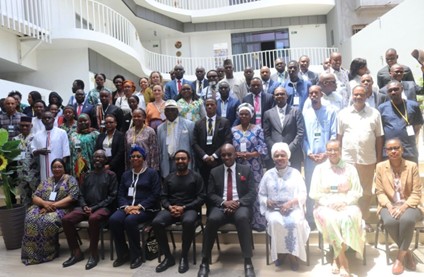
The Working Group on Extractive Industries, Environment and Human Rights Violations in Africa (the Working Group), a special mechanism of the African Commission on Human and Peoples’ Rights, convened a Continental Forum on Extractive Industries, Business, Human Rights and Environment in Africa (the Continental Forum), from 05 to 06 May 2026, in Dakar, Senegal, under the theme “Advancing Responsible Extractive Governance in Africa and in the Context of the Global Rush for Critical Minerals: Insights from 40 years of Promotion of the African Charter.”
The Continental Forum was held against the backdrop of the accelerating global rush for critical minerals, driven by the energy transition, digitalization, and geopolitical competition, placing the continent at the center of a new cycle of extractive processes with significant risks for the enjoyment of human and peoples’ rights, despite the opportunities it presents for advancing socio-economic transformation. The Continental Framework was also held within the broader context of the 40th anniversary of the African Charter on Human and Peoples’ Rights (African Charter), a landmark instrument affirming the collective rights of peoples to freely dispose of their wealth and natural resources and to enjoy a satisfactory environment favourable to their development.
In this context, the Continental Forum provided the opportunity to take stock of current trends and dynamics in the governance of extractive industries in Africa based on presentation from states parties, to reflect on and get understanding of the trends in and current state of human and peoples’ rights issues drawing on perspectives from affected communities and promoting understanding on the soft law instruments and jurisprudence of the ACHPR as useful legal resources for advancing legal and institutional safeguards and reforms for bridging the gap between the requirements of the African Charter and the practice of extractive industries in Africa.
The Continental Forum specifically sought to achieve the following main objectives:
i. Create a multi-stakeholder platform for dialogue on the intersection of extractive industries, human rights, environmental protection, and water governance in Africa, including tensions between development imperatives and the protection of human and peoples’ rights;
ii. Strengthen accountability for extractive-related human rights, environmental, and water and sanitation impacts, including through the application of the Commission’s State Reporting Guidelines under Articles 21 and 24 of the African Charter on Human and Peoples’ Rights (the Charter);
iii. Promote the dissemination and practical implementation of the Commission’s normative instruments, including the presentation of the Background Study on the Operations of the Extractive Industries Sector in Africa and discussions on emerging normative developments such as the Draft General Comment on the right to a satisfactory environment;
iv. Advance responsible business conduct in the extractive sector by promoting the operationalization of the Commission’s soft law standards;
v. Identify persistent and emerging governance challenges in the extractive sector and facilitate peer learning, including the sharing of best practices and replication-ready reforms among Member States, National Human Rights Institutions, civil society, and industry actors; and
vi. Support inclusive and sustainable natural resource governance by facilitating the development of continental standards within the framework of the Commission’s Resolution 550, Resolution 551 and Resolution 633, and mainstreaming African Charter standards into development and governance frameworks of the African Union (AU), including Agenda 2063 and the Africa Mining Vision.
A total of eighty-four (84) participants attended the Continental Forum, drawn from: Chairperson of the AU PRC; States Parties to the African Charter involving representatives of Policy, Regulatory, and Reporting Institutions of AU Member States; Members of the ACHPR; Expert Members of the Working Group; Representatives of AU Organs and Institutions including various AU Commission entities; Representatives of National Human Rights Institutions (NHRIs); Representatives of Civil Society Organisations and Community-Based Groups; Representatives of Communities affected by activities of extractive industries; Representatives of International and Regional Partners; and Representatives of the Academia and the Legal Profession.
AFFIRMATION OF FUNDAMENTAL PRINCIPLES
Following an interactive dialogue, comprising panel presentations and plenary discussions, the Continental Forum affirmed the following principles relating to the exploration and management of natural resources in Africa, including critical minerals as contained in the ACHPR’s Resolution 367 (ACHPR/Res.367(LX) 2017) on the Niamey Declaration on Ensuring the Upholding of the African Charter in the Extractive Industries Sector, Resolution 634 on Extractive Industries and the elimination of all forms of exploitation; the State Reporting Guidelines on Articles 21 and 24 of the African Charter, including
1. The sovereignty of all peoples over their wealth and natural resources is explicitly stated in Article 21 (1) of the African Charter, a right that must be exercised in the exclusive interest of the people, ensuring beneficiation, value addition, and terms of licensing and concessions that accrue the highest value for natural resources and for the revenues gained in advancing development needs of the people.
2. Procedural guarantees
i. Participation: The imperative for free, prior and informed consent and inclusive and meaningful participation of local communities, including women, children, youth and indigenous communities/populations, in decision-making processes relating to the extraction of natural resources.
ii. Civic space: The essential role of the rights to freedoms of expression, association, and assembly in ensuring that the exploration and management of natural resources is fair, transparent and accountable, and that it benefits the people.
iii. Accountability and remedies: The protection of the right to a remedy, ensuring that communities whose rights are violated in the context of extractive industries have access to an effective, accessible and timely legal mechanism to seek justice and reparation.
3. Non-discrimination and equality
In pursuing the objectives of Articles 21, 22 and 24 of the African Charter, consideration should be given to the most marginalized and socio-economically excluded members of society, including most notably women, but also children, persons with disabilities and older persons. In the implementation of these rights, policy measures should aim to rectify existing inequalities based on gender, ethnicity, religion, race and other similar grounds.
4. Obligations of States, including:
(a) General obligations under Article 1 of the African Charter
i. For giving effect to the rights in the African Charter and in the context of the extractive industries to Articles 21 and 24 of the African Charter read with other related provisions of the Charter and to that end adopt, revise or reform domestic laws and regulatory frameworks on extractive industries to ensure the protection and fulfilment of human and peoples’ rights in the context of the operation of extractive industries.
ii. Sign and/or ratify the Protocol on the Statute of the African Court of Justice and Human Rights (the Malabo Protocol), which extends criminal jurisdiction to legal persons, such as corporations, for crimes including illicit exploitation of natural resources, trafficking in hazardous waste, corruption, and money laundering.
(b) Duties to respect, protect, promote and fulfil:
i. Ensure that businesses, including companies and multi-national corporations, respect all human rights wherever they operate, whichever sector they operate in, and regardless of their nationality or size. They should also ensure that businesses are subject to stringent legal obligations aimed at managing environmental, social, and governance (ESG) risks, as opposed to voluntary responsibility.
ii. Ensure fulfilment and compliance with their obligations under Articles 21 and 24 of the African Charter relating to extractive industries, human rights and the environment and regularly report to the Commission on the measures taken to implement these provisions in accordance with the State Reporting Guidelines and Principles on Articles 21 and 24 of the African Charter.
iii. Ensure free, prior and informed consent and inclusive participation of local communities in decision-making processes relating to extractive industries, particularly women, children, youth and indigenous communities/populations.
5. Obligations of Businesses
i. Direct negative obligations, including but not limited to the ‘do no harm’ principle.
ii. Put in place an ongoing and proactive human rights due diligence and care process across their entire supply chain to identify, prevent, mitigate, and account for how to address the impact of their activities on human rights and the environment.
iii. Legal obligations as opposed to voluntary responsibility for respecting human rights, fiscal, labour, and environmental standards entailing administrative, civil and criminal responsibility.
iv. Obligation to contribute towards the fulfilment of the rights of host communities.
v. Provide effective remedies, including fair compensation
ACTION POINTS
The Participants of the Continental Forum identified and adopted the following action points:
i. Follow up on the commitment of the Chairperson of the Permanent Representatives Committee (PRC) of the African Union for the ACHPR’s Working Group on Extractive Industries, Environment and Human Rights to brief the PRC on the continental forum and on the key items that deserve follow-up and action of policy organs of the AU;
ii. Adopt within the framework of the AU a common African position and continental vision on governance of the exploration and development of ‘critical minerals’ to bolster its negotiating power and agency, including through the establishment of an African strategic resources authority;
iii. Establishing a web-based system for monitoring, documenting and systematically responding by the Working Group to human and peoples’ rights issues that arise in extractive industries and business operations in Africa, with a particular focus on protection of civic space and procedural guarantees, as well as transparency and accountability;
iv. Work with AU member states including Senegal and the Chairperson of the AU for 2026 to secure the adoption of a decision by AU policy organs on the development of a binding African legal instrument by the ACHPR on the regulation of the activities of transnational corporations and other business enterprises based on the ACHPR Resolution calling for such legal instrument, with a mandate on the settlement of disputes involving extractives to end adverse impacts the use of extra-continental forums for such disputes;
v. The WGEI to continue with the development of the General Comments on the Promotion and Protection of the Right to Environment in Africa, mandated by ACHPR/Res. 633(LXXIII);
vi. Work with relevant AU bodies such as the African Peer Review Mechanism (APRM) and the Anti-Corruption Board in auditing of existing and ongoing negotiations on ‘critical minerals’;
vii. The ACHPR, in collaboration with other relevant institutions of the African Union, including the Pan-African Parliament, develop a model law integrating human and peoples’ rights in the extraction and development of natural resources;
viii. Continue to raise awareness about its State Reporting Guidelines and Principles on Articles 21 and 24 of the African Charter Relating to Extractive Industries, Human Rights and the Environment;
ix. The integration of human and peoples’ rights standards into AU development, resources, trade and economy regimes, and hence working closely with other AU instruments such as the Mining Vision, African Continental Free Trade Area (AfCFTA) and Agenda 2063; and
x. Rename the Continental Forum to the “Keba Mbaye Continental Forum on Extractive Industries, Business, Human Rights and Environment in Africa” as proposed by the Chairperson of the WGEI, and endorsed by the Hon. Minister of Energy, Petroleum and Mines of the Republic of Senegal, in future, with the approval of the participants of the forum.
Done in Dakar, Senegal on 06 May 2026