

During the 87th Ordinary Session of the African Commission on Human and Peoples’ Rights (the Commission), held from 24 April to 20 May 2026, in Banjul, Republic of The Gambia;
The Joint Fact-Finding Mission of the African Commission on Human and Peoples’ Rights on the Human Rights Situation in the Sudan and the United Nations Independent International Fact-Finding Mission for the Sudan;
Acting within the framework of the Addis Ababa Roadmap and their respective mandates, and recalling that these consist inter alia of investigating and establishing the facts, circumstances and root causes of the violations and abuses of international human rights law, as well as violations of international humanitarian law committed in the context of the armed conflict in the Republic of the Sudan, with a view to contributing to accountability and the protection of civilians;
Reaffirming their shared commitment to the promotion and protection of human rights and fundamental freedoms in the Sudan, in accordance with applicable international, regional and national legal frameworks;
Further recalling that the armed conflict which erupted in mid-April 2023 in the Sudan between the Rapid Support Forces (RSF) and the Sudanese Armed Forces (SAF) has generated one of the gravest humanitarian and human rights crisis in the world, marked by widespread suffering, mass displacement, severe food insecurity, collapse of essential services, and grave risks to regional peace and stability;
Deeply concerned by the continued escalation of violence across the Sudan and by persistent patterns of killings, arbitrary detention, torture and other ill-treatment, ethnic cleansing, enforced disappearances, conflict-related sexual violence, starvation, indiscriminate attacks, attacks against civilians and civilian objects, looting, extortion, as well as forced displacement;
Recalling that both Missions have found that the RSF and SAF, together with their respective allies, bear responsibility for the commission of violations of international humanitarian law and international human rights law, including grave violations against children, with violations committed by the RSF being particularly widespread and systematic;
Alarmed by the current situation in Darfur, including in El Fasher, as well as in the Kordofan regions, where civilians face heightened risks of atrocity crimes, siege conditions, displacement, denial of humanitarian assistance, and ethnically targeted violence, in which vulnerable groups including the elderly and people living with disabilities are further impacted;
Further concerned that attacks against humanitarian personnel, medical facilities, markets, schools, camps for internally displaced persons, places of worship, and civilian infrastructure indispensable to survival continue to intensify the suffering of civilian populations;
Recognizing the courage and resilience of victims, survivors, Sudanese civil society, humanitarian actors, journalists and human rights defenders — particularly women and youth, whose commitment to peace and to documenting violations deserves particular recognition — who continue to document abuses and assist affected communities at great personal risk;
Recognizing further the importance of cooperation, complementarity and coordination between regional and international accountability mechanisms in support of civilian protection, documentation of violations, preservation of evidence, and future justice processes;
Emphasizing that there can be no sustainable peace in the Sudan without addressing the root causes of the conflict, and the quest for justice and accountability, inclusive governance, and the restoration of dignity and rights for all Sudanese people;
HEREBY DECLARE AS FOLLOWS:
1. Immediate Protection of Civilians
All parties to the conflict must immediately cease attacks against civilians and civilian objects and fully comply with their obligations under international humanitarian law and international human rights law. The protection of civilians must be treated as an urgent and overriding priority.
2. Ceasefire and De-escalation
All parties to the conflict must take immediate steps toward a credible cessation of hostilities and a sustainable ceasefire, supported by effective monitoring arrangements and confidence-building measures.
3. Guarantee of Humanitarian Access
All parties to the conflict must ensure rapid, safe, sustained and unimpeded humanitarian access to all affected populations by all necessary routes and must refrain from attacks on or obstruction of humanitarian personnel, assets and relief operations.
4. Sexual Violence and Gender-Based Crimes
Immediate and effective measures must be taken to prevent and respond to conflict-related sexual violence and other gender-based crimes, including through survivor-centred access to medical care, psychosocial support, protection, remedies and accountability.
5. Ethnic cleansing
Immediately halt all forms of ethnic cleansing by the RSF particularly targeting Indigenous people in Darfur, including in El Fasher and in the Kordofan regions and ensure that they are fully reintegrated back home, their cultural identity restored and their heritage including mineral resources are protected.
6. Arbitrary Detention and Enforced Disappearances
Practices such as arbitrary detention, enforced disappearances, torture, and cruel, inhuman or degrading treatment must cease immediately. All persons arbitrarily deprived of liberty must be released or brought promptly before a competent judicial authority.
7. Accountability and Justice
Serious violations and abuses, including war crimes, crimes against humanity and other atrocity crimes committed by the RSF, SAF, and their allies, and acts by States and entities which aid or abet serious violations and abuses committed by the warring parties must be subject to prompt, independent, impartial and effective investigations, with a view to ensuring justice, truth, reparations and guarantees of non-recurrence.
All relevant actors must fully support and cooperate with the efforts of the International Criminal Court in the Sudan. An accountability mechanism that could be African-led, should also be established to prosecute serious violations committed in the Sudan, while ensuring complementarity with the international criminal justice institutions.
8. Cooperation with International and Regional Mechanisms
All parties to the conflict must cooperate fully with the two Fact-Finding Missions and other relevant accountability mechanisms, including by granting access, facilitating engagement with victims and witnesses, and preserving relevant records and evidence.
9. Implementation of the Recommendations of Both Fact-Finding Missions
All relevant actors, including the parties to the conflict, Sudanese stakeholders, the African Union, the United Nations, Member States, as well as regional and international partners, must take concrete and timely steps to implement the recommendations issued by the two Fact-Finding Missions. Particular priority must be given to measures aimed at protecting civilians, protecting human rights defenders and other such groups which play a key role in identifying early-warning indicators and documenting human rights violations, ending ongoing violations, ensuring humanitarian access, supporting survivors including through interim reparatory measures and sustained access to medical, psychosocial and legal assistance, preserving evidence, advancing accountability, and supporting an inclusive civilian-led path toward peace and democratic governance.
10. Role of the International Community
The international community, including the African Union, the United Nations, Member States and relevant regional organizations, should intensify coordinated efforts aimed at protecting civilians, supporting humanitarian operations, advancing accountability and preventing further escalation, including through targeted measures against those responsible for grave violations or those fueling the conflict.
Other states must refrain from acts that fuel the conflict by preventing the transfer of weapons, equipment, financial and logistical support to parties suspected of serious violations and use of all available diplomatic, political, and preventive tools to halt further mass violence.
11. Civilian Future of Sudan
We affirm that no durable solution can be achieved through military means alone. A sustainable future for the Sudan requires an inclusive, civilian-led political process reflecting the meaningful participation of women, youth, civil society and communities from all regions of the country.
The two Fact-Finding Missions reaffirm their commitment to continue documenting violations and abuses, supporting efforts to protect civilians, and contributing to peace, justice, accountability and dignity for the Sudanese people.
Neither impunity nor military force can secure the future of the Sudan. Only a path grounded in protection, justice and inclusive civilian governance can lay the foundation for lasting peace.
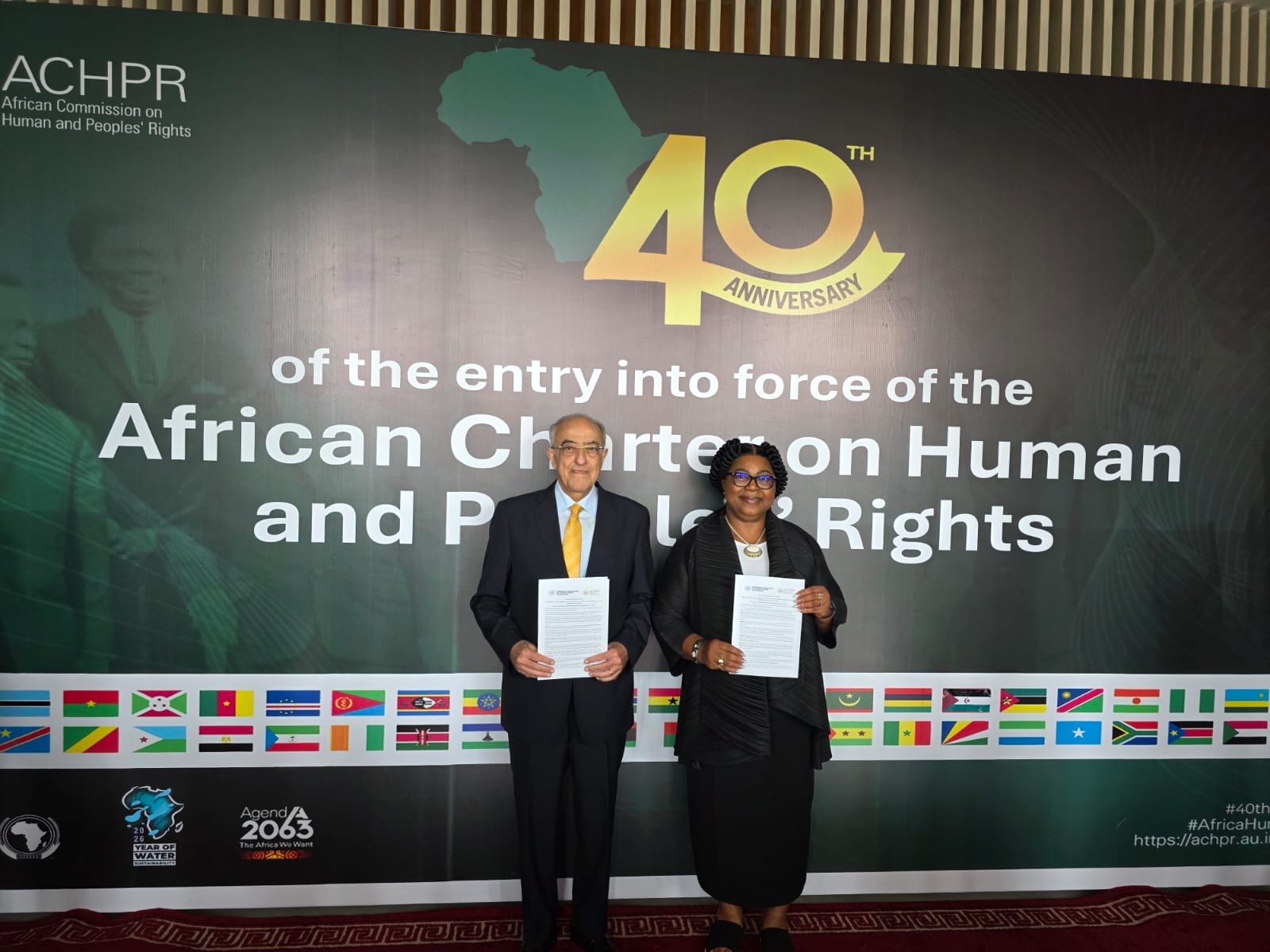
Done at Banjul, Republic of The Gambia, during the 87th Ordinary Session of the African Commission on Human and Peoples’ Rights, on 12 May 2026.
For the ACHPR Joint Fact-Finding Mission
Commissioner Hatem Essaiem, Chairperson of the Joint Fact-Finding Mission on the Sudan
For the United Nations Independent International Fact-Finding Mission for the Sudan
Mohamed Chande Othman, Chairperson of the United Nations Independent International Fact-Finding Mission for the Sudan